Search This Blog

Saturday, April 5, 2014

Florestan Fernandes National School of MST, Brazil

A firsthand account by S. Kannaiyan, General Secretary, SICCFM

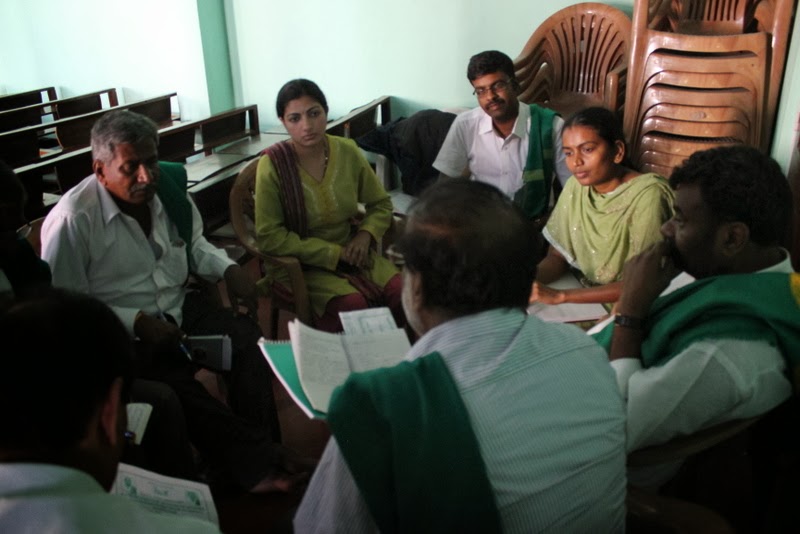
Brazil’s Landless Workers Movement, Movimento dos Trabalhadores Rurais Sem Terra (MST) has started a national school named after Florestan Fernandes who was leader and intellectual of working class in Brazil and movements across south America. Paulo, one of the Political coordinators of the School explained more about the MST school. “MST school is the national school for its cadres. There are centers at provincial levels in Brazil. MST school in Sao Paulo has the required essential facilities, and there are plans to have schools in other places too. They have schools in Brasilia, Ciarea, Para (Near Amazon). Currently there are 30 formation Schools for MST.”


In 1996, the MST decided to build the school and took three years to establish it. Many well-known personalities have understood the significance of this Movement and support it.
Sebastian Salgado, the world famous photographer who made stunning photographs of MST’s fights and people’s life and gave the rights of his publications to MST as a source of revenue to build the school.
Chico Buaque, a very popular singer of Brazil also gave the rights of his songs to MST.
Jose Saramago, a noted writer also gave his rights of his books to MST to build their school.
The school was constructed with hard work of the brigades who came from all over Brazil. Architects and engineers have volunteered and designed the school and helped in the construction, with the school being inaugurated in 2005. The school has a good library stocked with books on different subjects and nice class rooms, meeting halls, well-maintained hostels and residential buildings, kitchens and dining halls. There is also a computer room with internet connections for students. The school area is Wi-Fi enabled. Every day in the morning students express innovative ideas and host flags of MST and La Via Campesina in the school.


So what they do in the MST school? They give political training on a variety of subjects. Some of them are:
1)   Political theory. Four national courses lasting 40 days each every year, with two of these courses devoted to train the future leaders of MST
2)   A course for leaders from social movements, conducted in three phases with each phase running 45 days
3)   An intensive course on systematic reading of Karl Marx in six phases, each phase being of 1 week duration
4)   A course similar to reading of Karl Marx but to study Florestan Fernandes who has written 60 books of classical political thoughts. This course is to prepare students to read his works.
5)   Latin American Studies is an international course. La Via Campesina - CLOCK (Latin American Coordination of Social Movements) and La Via Campesina ALBA- Net work of social movements in Latin America send their students for this course. There are three courses offered to these students under Latin American Studies.
i.                Training of Trainers course for political training. This is a 40 days course and by the end of the course students have to present a program for their movement. Around 60 students from the 16 countries are participating in this course.
ii.              Latin American Political Theory is the longest course of the school of 3 months duration.
iii.            Specialisation in Latin American Studies. This course is being conducted in partnership with the federal university of Juiz De Fora. This is a 2 year course conducted in 5 phases; the subjects of the course include philosophy, politics, economy, agrarian questions and organisational theories. One phase of the course is conducted in the national school in Sao paulo and the rest in the university.

Formal courses: MST national school in partnership with many universities conducts formal graduation and post graduation courses. Seven formal courses are coordinated with Federal University of Brasilia, Federal Rio de Janeiro University, University of Sao Paulo (USP) and UNESP, the state university of Sao Paulo and UFSC (Federal University of Santa Catarina). Graduation courses including art, drama and poetry pertaining to rural areas and post graduation courses in agro ecology and education, Masters courses (similar to M.Phil courses in India) in health and education and Marxism etc. are conducted.

Seminars, debates and meetings: People visit the MST school to attend seminars in various subjects. At least eight seminars are conducted every year on different topics including Latin American Studies. Apart from seminars, there are cycles of debates conducted every Saturday. The debates are open to all. Meetings on different subjects and new issues are also organised regularly in the school. Around 4100 people in 2012 and 3500 people in 2013 were benefited from the school by studying and participating in different programs.

The MST school is an idea of construction built during the process of the movement. All the volunteers stay in the school for a specific time of two to four years, do collective work with division of responsibilities. During the time my visit, Paula Djacira and Erivan were the political coordinators of the school and were collaborating with other friends and within the larger MST movement. The MST school does not get any support from the government and does not pay anybody. Teachers volunteer and students study and work in the school. Some food is grown in the campus with the rest supplied from various states of Brazil from MST.


Paulo’s parting shot to me was that he hoped what was happening in the school would set the stage for the future of society. Indian peasants movements have no such school to systematically educate its cadres and leaders. I felt impressed by the equal participation of young women and men in the all the activities of the school from class room to kitchen. Another impressing thing which I felt in the school was that the schools contribution to Latin American studies which strengthens the (America Luccha) American struggle which demonstrated the collective struggle of Latin American people which is something not there in Asia needs to be explored.

Wednesday, March 19, 2014

Veerappa Moily claims that he has not approved any field trials, when confronted by farmers

South Indian farmer organizations, led by KRRS march to Veerappa Moily's House to protest field trial approvals
Bangalore, 18th March, 2014: When confronted by scores of farmers of the Karnataka Rajya Raitha Sangha (KRRS) and South Indian Coordination Committee of Farmers’ Movements (SICCFM), from four states of South India, Veerappa Moily, the Union Minister for Environment and Forests, today claimed that ‘as far as his knowledge goes, he had not approved any field trials of GM crops’ (1). The farmers had gone to demand that the permission he gave to the regulators to go ahead with clearances for GM field trials be revoked and that he also explain the fresh basis on which he reversed his predecessor Jayanthi Natarajan’s decision to suspend approvals given by GEAC.  Moily told the protestors that “he had only looked at the file and returned it” and did not approve any trials.

Union Minister for Environment and Forests listening to the concerns voiced by farmers against GM crops

“We are not sure if Veerappa Moily is telling the truth or only presenting smart lies in front of us. If this is indeed true that he only looked at the file and returned it, this means that Genetic Engineering Appraisal Committee (GEAC) which is meeting on March 21st 2014 to give further approvals for GM crop trials should not give any clearances, since the earlier Minister’s orders will still be binding on them. Jayanthi Natarajan, in her letter to the Prime Minister dated 9th July 2013 (2) that she had ‘felt it important to await the final judgement of the Supreme Court in this matter, and particularly with a view to avoid any disrespect to the Hon’ble Court directed that further proceedings may await the decision of the Supreme Court’ (which incidentally is on April 15th) – which means that this view of the Minister has to continue to prevail on the regulators”, said Mr. K. T. Gangadhar, President of Karnataka Rajya Raitha Sangha.


Farmers marching towards Union Minister Veerappa Moily's house to protest against field trials of GM crops

Earlier in the day, scores of farmers of the Karnataka Rajya Raitha Sangha (KRRS) and South Indian Coordination Committee of Farmers Movements (SICCFM) staged a protest march and sit-in at the residence of Veerappa Moily in Bangalore. This was in response to the recent announcement by the Minister in a press conference in Delhi (on 27th February 2014) to permit hundreds of field trials of GM crops including GM varities of rice, wheat, maize etc across the country. The decision had been widely condemned by farmer unions, civil society, political parties etc, given the growing evidence of adverse impacts of GM crops to farm livelihoods, human health and environment.

“This is a clear turnaround from what the Minister announced in Delhi and seemed to have done, in terms of giving a go-ahead to the 117th meeting minutes of the GEAC. If he is hiding behind semantics by saying that he did not clear field trials, we want to warn him that we will come back in greater numbers to protest these lies from him. If he is speaking the truth that he has not made any file notings at all or give clearances, we want him to give express instructions now to the regulators not to clear any trials in the upcoming meeting, given the amount of confusion prevailing on the subject”, said Chukki Nanjundaswamy, working president of KRRS.

Farmer leaders addressing the gathering about GM crops and its adverse consequences


“GM crops are the latest tools in the hands of Multinational seed companies to take control of our seeds. The decision by Moily to permit the experiments of these risky GM seeds of various companies like Monsanto, Syngenta, Bayer, Dupont etc in our farms across the country shows that our governments are hand in glove with them in making that happen” said Kannaiayan Subramanian of SICCFM.

Addressing the farmers Badagalpura Nagendra, General secretary of KRRS stated that “It is unfortunate that such GM crops are being mindlessly promoted by the central and state governments even after the repeated failure of Bt cotton, the only GM crop approved for commercial cultivation in the country. There was massive failure of Bt cotton reported in Karnataka in the last season which was acknowledged even by the Agriculture Minister in the Karnataka state assembly. However, the compensation announced was measly and inadequate. The tragedy is that companies like Monsanto who own the Bt technology walk away with thousands of crores of Rupees earned as royalty from Bt cotton seed sales while the farmers are pushed to suicides. We want to warn the Karnataka government not to give any NOCs to field trials here; otherwise, farmers will be forced to ensure that these trials are cremated”.

The announcement by Moily late last month received flak from state governments including the Congress ruled Kerala government. The Chief Minister of Tamilnadu responded by saying that she will not permit field trials in her state.

Various state govts besides kerala and Tamilnadu, like Bihar, West Bengal, Odisha, Madhya pradesh, Chattisgarh and Rajasthan had denied permissions for field trials in the past. Hailing the recent statement by the Tamilnadu Chief minister J Jayalalitha to keep the state free from GM crop trials  P.Suresh Kumar of Katchi Sarpartra Tamizhaga Vyavasaigal Sangam said that “agriculture is a state subject and it is unacceptable that the central government continues to peddle GM crops despite opposition from state governments.”

Those gathered also pointed to the reccomendations by the parliamentary standing committee on Agriculture which in its report submitted in 2012 highlighted the various concerns with GM crops and the inadequacy of its regulation in the country and strongly reccomended against any open release of GM crops including for field trials as they could lead to irreversible contamination of seed and food supply. The Supreme Court appointed Technical Expert committee had also given similar recommendations last year.

“GM seeds are not just a threat to seed sovereignty of the country but also food safety and sustainability of our environment and they have no place in our country. Experiences with field trials both in the country as well as in other parts of the world shows that they can contaminate our seeds and food supply chains ” said Davison of Kerala Coconut Farmers Association. He further stated that “It is nothing but vested interests to promote GM crops when it is so clear that science and society are against it”.

KRRS and SICCFM declared that they will step up the campaign against GM crops and their promoters in the coming days, that this will be made into an election issue and that will not permit even a single field trial to happen in the state. They urged the Chief Minister of Karnataka to stand by the will of the people and deny any permission for such risky experiments in the state.

Notes to the Editor.
 1. The video link of Veerappa Moily's statement to farmers is available at http://youtu.be/fCxRuUuW3zY (English      video),  http://youtu.be/n6O6W31T2M0 (kannada video)
 2. The letter by Jayanti Natarajan to the prime Minister is available at  http://indiagminfo.org/?attachment_id=680

Thursday, February 27, 2014

Statement of the 2014 Farmers’ Forum

(Rome, February 21, 2014 - Posted by La Via Campesina) 

IFAD


We, delegates to the 5th Farmers' Forum, the representatives of small-scale producer organizations, speaking on behalf of millions of small-scale farmers, artisanal fishers, pastoralists, livestock breeders, and indigenous communities, hereby communicate our opinions and proposals to IFAD and its governing bodies.

The International Fund for Agricultural Development (IFAD) was founded in 1977 to work on behalf of the rural poor. With the creation of the Farmers' Forum in 2005, it began to work in collaboration with the rural poor. At that time, it was way ahead of the rest of the UN system in opening up to systematic dialogue with organizations representing the intended beneficiaries of its action. Since then, the partnership between IFAD and small-scale producers' organizations (POs) has brought significant benefits to both sides. IFAD's image, its working methods and the effectiveness of its programs have profited from its association with our organizations. On our side, we have had some opportunities to bring our concerns to the governing bodies and the staff of IFAD, as well as to gain access to funding for our capacity building programs.

But the world has not stood still over the past decade. Since the food crisis of 2007, agriculture has climbed to the top of the international agenda, and small-scale producers are now the object of everyone's attention. Climate change, environmental degradation, conflicts, agrarian crises and numerous suicides in many regions, desertification and water scarcity, food-related health issues, toxic chemicals, the scandal of land grabbing, food waste and commodity speculation - All of these factors have exposed the unsustainability of a food system based on industrial agricultural production and globalized value chains that reward all of the actors except for food producers and consumers. At the same time as this is happening, we continue to strengthen our organizations' capacity to advance alternative proposals for sustainable agro-ecological production models and equitable local, national, and regional food systems. We have multiplied and capitalized on the countless resilient farming practices that our members are conducting in all regions of the world. On the governance side, the reform of the Committee on World Food Security has set a new standard for the participation in the process of decision-making of those most affected by food insecurity and malnutrition.

New challenges and new opportunities have opened up for the Farmers' Forum partnership that IFAD established with us almost a decade ago. If we do not grasp them, our collaboration risks stagnating. However, If we take
advantage of these challenges and opportunities, together we can make significant contributions to addressing some of the most serious issues that the world faces today. This year, the International Year for Family Farming, is the time to act. It is with this intention that we put forward the following proposals.

Smallholder family farming should be recognized as a pillar of local, sustainable development and a substantial guarantee for food sovereignty and peace and stability in the world. This vision has to be expressed at every level and implemented in national actions That have positive effects for every community. The International Year of Family Farming 2014 should constitute a significant step forward in improving the quality of life of hundreds of millions of smallholder family farmers, fisherfolk, livestock breeders and indigenous communities. We expect concrete initiatives and policies that will include mobilizing resources and improving access to land, water, oceans and other inputs and natural resources. Agroecology and organic agriculture should be promoted, and farmers' control over their production, especially With regard to their seeds and indigenous species of
livestock and fish, should be strengthened; their rights of use should not be violated.

*We call upon IFAD to work with us to:*

Enhance the image of small-scale family farming, pastoralism and artisanal fisheries as the source of 90% of the food consumed in the world; obtain formal recognition in each country of the status and profession of small-scale family farmers, pastoralists and artisanal fishers ; and, through specific proposals, technical assistance and exchanges between countries and continents, engage in the formulation of more effective policies and support for smallholder producers and strengthen the involvement of smallholder producers' organizations at the
country level and in operational activities*

- Facilitating policy dialogue between smallholder producer organizations and governments is the top priority at the country level. IFAD should provide increased support for the implementation at the national level of the Committee on World Food Security's recommendation calling on governments, small-scale producers and other actors to develop a national vision for the future of smallholder production. This would provide a concrete occasion to establish national multi-actor dialogue platforms in which all genuine small-scale producer organization are included.

- Although there has been progress in involving our organizations in the national programmes (COSOPs) and in providing grants for our own organizations, we are still excluded from the design, implementation and evaluation of too many of the projects/loans which constitute the bulk of IFAD operations. The existing examples of such projects being implemented in a tripartite arrangement, involving IFAD, the government and the farmer organisations, need to be multiplied.

- IFAD should more systematically inform and involve farmers' organisations with regard to all of the initiatives it undertakes in a country. IFAD country offices and missions should systematically make contact with Farmers' organizations. Farmers' organizations should be endowed with more capacity for independent analysis, critical assessment and monitoring. Rather than calling on external consultants, each project should earmark
specific resources to allow farmers' organizations to provide inputs into the design and supervision process. We are willing, in all countries, to engage in IFAD Country Programme Management Teams.

- More attention should be given to issues of concern to FOs, such as risk management in agriculture, the guaranteeing of funds in order to facilitate access to credit, and the resolution of conflicts over natural resources.

- IFAD should extend its fisheries programmes to more countries and provide an inclusive space for small scale fishers' organizations. IFAD should ensure the integration of small-scale fishery organizations into its on-going grants programmes. It should support the implementation of the International Guidelines on Securing Sustainable Small-scale Fisheries and facilitate dialogue between small-scale fisher organisations' and national governments.

-More attention should be given to livestock breeders and pastoralists. We recommend that a special session on livestock issues and pastoralism be held at the next Farmers Forum.

- A global grant programme should be established to provide direct support to organizations of farmers and fishers, in order to increase their capacity in policy and economic areas as well as to strengthen their initiatives. It should contain specific programs for women and youth, including their leadership and capacity development and the establishment of women and youth wings. It should also provide support for farmers' schools and training centers for smallholder sustainable agriculture, and for the inclusion of training modules on agroecology in the agricultural school system.

*Strengthen the interaction between the Farmers' Forum and IFAD governance*

- A more continuous and autonomous functioning of the Farmers Forum and its Steering Committee is necessary. This would allow a qualitative leap in the functioning of the Forum, improving its analysis and its interactions with IFAD at different levels, and would lead to a more effective contribution on the part of farmer organisations to IFAD programs and initiatives. Taking into account the changes that have taken place since the founding of the Farmers' Forum, a reform of the Steering Committee is necessary in order to clarify its mandate, composition and working methods. We expect that IFAD will accompany this next step in our deepening collaboration.

- Enable the Steering Committee to provide the Board with information and opinions that can enrich its discussions, through such means as inviting a Steering Committee representative to sit as an observer on the IFAD Executive Board, or establishing an advisory group to the Executive Board.

- Set up a dialogue with IFAD governing bodies on key issues related to IFAD's mission and concepts, such as value chains, adequate technologies and investment, and market access. 

*Strengthen collaboration in other global policy forums*

- IFAD and our organizations should strengthen our coordination in support of the interests of small-scale producers in international forums/institutions, such as the Committee on World Food Security, and in programmes such as the Global Agriculture and Food Security Programme.

- IFAD governing bodies should adopt CFS policy instruments such as the Guidelines on land tenure and the recommendations of the roundtable on investing in smallholders adopted at CFS40. It should apply them to IFAD
projects and programs, and support their implementation at the national level, promoting the participation of small-scale producers' organizations.

-IFAD should also align its goals with the Convention on Biological Diversity (CBD) and with the Cartagena Protocol on Biosafety. 

*We call upon the governments to:*

- Resolve the agrarian crises in their countries. The measures to do so include making effective use of the resources made available by IFAD, implementing the CFS guidelines on land tenure and the FAO guidelines on
small scale fisheries, as well as undertaking agrarian and aquatic reforms and investing in smallholder production - including appropriate infrastructure and credit facilities.

- Continue to support IFAD as a key institution that channels resources to the smallholder, food producing sector, and to make the necessary resources available in the coming years for an ambitious agenda that will be launched in this International Year of Family farming,

- Implement the decisions taken in the CFS and in the International Conference on Agrarian Reform and Rural Development (ICARRD), as well as the findings of the International Assessment of Agriculture, Science, and
Technology for Development (IAASTD), calling on IFAD support when it is appropriate, and use these decisions as central guideS for the elaboration of IFAD programs and projects,

- Involve producers' organizations in the design and implementation of all IFAD programs and projects and in the IFAD Country Program Management Teams.

- Give special priority to women and youth, as both women and youth are key for smallholder food production.

*We call upon our organizations to:*

- Make a commitment to working together in solidarity and mutual trust, and to promoting our common agenda on smallholder food production,

- continue to build our organisations, enhancing our capacity to participate effectively in dialogue and collaboration with national governments and regional and international institutions including IFAD, and strengthening our capacity to provide services to our members.

- create room for women and youth in order to ensure that they gain an effective space in our organisations and that their concerns are given a high priority in our work,

- strive to achieve a participation of 50% women and 30% youth at the next global meeting of the Farmers Forum.

Sunday, February 16, 2014

An unhappy Valentine's Day for some - Karuturi, the iconic landgrabber, flops

Tax Justice Network Forum Syd Kenya GRAIN Anywaa Survival Organisation South Indian Coordination Committee of Farmers Movements

Karuturi Ltd, the Kenyan flower production unit of Karuturi Global, is in financial collapse and been put under receivership. One of the world's most infamous landgrabbers is in its deepest trouble yet.

On 11 February 2014, CfC Stanbic Bank in Nairobi took over the Karuturi farm in Naivasha while management was assigned to The Business Advisory Group Ltd. The new managers will assess the true financial situation of the firm, which has stopped paying its workers, suppliers and utility providers since many months, and settle the company's outstanding debts, which reportedly exceed US$ 5 million. Until now, the flower farm in Naivasha was its cash cow, responsible for three-quarters of the Karuturi empire's annual global earnings.

Bangalore-based Karuturi Global Ltd is one of the largest foreign agribusiness conglomerates in Africa. In 2007, it began expanding its operations to Kenya and Ethiopia to take advantage of generous tax breaks and cheap land, water and labour. It soon became the world's largest cut rose exporter and acquired over 311,000 ha of fertile land in southern Ethiopia for food production.

Now, this leading example of foreign direct investment in African agriculture is on the verge of collapse -- and Africans are paying the price.

Karuturi's overseas business ventures are causing untold suffering. In Kenya, the workers have been living in inhumane conditions without pay, water or electricity since months. In the last six months, their medical services have been shut down and the school for their children has been closed.[1] On top of this, Karuturi owes the Kenyan government millions of US dollars in unpaid taxes that it hid through doctored invoices and transfer pricing.[2]

In Ethiopia, the Anywaa and other communities that were violently displaced from their lands without consultation to make way for Karuturi's farming operations have lost their livelihoods and been living in exile without proper compensation. Karuturi, however, has been unable to cultivate more than a small fraction of those lands and local sources report that the farms have stopped operations. Last month, the Ethiopian government issued a warning to Karuturi to clarify the standing of its agricultural investment project or see its permit withdrawn.

From tax fraud to labour violations, Karuturi must pay for its crimes, immediately. And the international community must stop supporting such egregious corporate malfeasance in the name of "foreign investment", or worse "development".

Notes:

[1] See our accompanying backgrounder for the details: http://tinyurl.com/mveztag
[2] See our media release ("Karuturi guilty of tax evasion") and backgrounder ("A litany of trouble") of 22 April 2013: http://tinyurl.com/koqccth.

For more information:

Mr Stephen Gichohi, stephen.gichohi@forumsyd.org, +254725401366, or Ms Mukami Kowino, +254722436802, mukami.kowino@forumsyd.org, Forum Syd Kenya, Nairobi (on the Karuturi farm workers situation & the campaign against transfer mispricing in Kenya)
Mr Devlin Kuyek, GRAIN, Montreal, devlin@grain.org, +15145717702 (on Karuturi & global land grabbing)
Dr Attiya Waris, Law School, University of Nairobi, attiya@uonbi.ac.ke, +254771891571 (on the Kenyan tax dispute and the struggle for tax justice across Africa)
Mr Nyikaw Ochalla, Anywaa Survival Organisation, London, ochalla@hotmail.com, +447939389796 (on Karuturi in Ethiopia and the indigenous peoples' situation)
Mr S. Kannaiyan, South Indian Coordination Committee of Farmers Movements, India, sukannaiyan69@gmail.com (on Karuturi's operations in India and Africa seen from the perspective of Indian farmers)

Saturday, February 8, 2014

The aftermath of the WTO Bali Minesterial and other Current Farming issues that concern You

Farmers in India and most developing countries are threatened by many internal and external forces. Industrialization is seen as the only way for a country to ‘develop’ and in this mindless frenzy, the vital role played by farmers in sustaining an entire population is largely ignored. Governments are obsessed with GDP, businesses with profit and the media with the Western way of life. Farmers and agriculture are deliberately and successfully kept hidden from the general public.

Hence, the South Indian Coordination Committee of Farmers’ Movements (SICCFM) met at Cochin, Kerala on the 25th and 26th of January in continuation of their efforts to collectively address issues of farmers belonging to the five states of Maharashtra, Karnataka, Andhra Pradesh, Tamil Nadu and Kerala together. The participating organizations were:
  • Karnataka Rajya Raitha Sangha (KRRS) from Karnataka
  • Tamilaka Tamilazha Vivasayikal Sangham (TVS), Katchi Sarpartra Tamiliga Vivasayigal Sangam, Uzhavar Ulaippalar Katchi and Tamil Nadu Vyavasaikal Tolilarkal Munnetra Sangham (VTMS) from Tamil Nadu
  • Shetkari Sanghatana from Maharashtra
  • Kerala Coconut Growers’ Association from Kerala
  • Food Sovereignty Alliance from Andhra Pradesh
South Indian farmers at the SICCFM meeting
SICCFM general secretary Kannaiyan addressing the gathering
Each state had different issues but some cut across all boundaries: cheap food imports, rising costs of agricultural inputs, farmers driven to suicide, land grabbing by the Government and companies, loss of traditional crop varieties, corporatization of food and milk and finally, climate change.

South Indian Farmers at the SICCFM meeting
The different States engaged in discussion at the SICCFM meeting
Some specific concerns of each state were:

Maharashtra felt the need for a Sustainable Agriculture committee to provide training and support to farmers wishing to make the transition from high cost to natural farming.

Farmers' representatives from Maharashtra with Afsar Jafri at the SICCFM meeting
Farmers' representatives from Maharashtra with Afsar Jafri

Andhra Pradesh strongly called for the protection of forest rights, traditional seeds and customs. Since corporatization of milk production has already begun here, there is a need to organize mass protests against the IFFCO and Fonterra joint venture to produce top-quality milk for premium customers. This would destroy the livelihoods of thousands of local dairy farmers. Another important issue is the acquisition of land for Special Economic Zones (SEZ) mushrooming around the capital city of Hyderabad.  

South Indian Farmers at the SICCFM meeting
Leaders from the Food Sovereignty Alliance, Andhra Pradesh exchanging ideas

Tamil Nadu presented the following demands: persuading the government to purchase coconut instead of copra, making MNREGA mandatory for farmers, allowing toddy tapping, banning the import of oil rich coconut cakes, encouraging ethanol production from sugarcane and creating a separate agricultural budget which would fix scientific prices for milk and other agricultural produce.

South Indian farmers at the SICCFM meeting
Tamil Nadu farmer leaders deep in discussion

Kerala, which has faced severe issues with the pesticide endosulfan appealed to leaders from Karnataka and TN to educate their farmers to discontinue its use, which was still being sold under different names.

South Indian farmers at the SICCFM meeting
President of the Kerala Coconut Farmers' Association, Ravindranath actively listening

Karnataka has seen a steep rise in farmers’ suicides and hence leaders recommended an Anti-suicide Cell to be established, whose members shall include the District Commissioner (DC) and the Additional DC. The Cell would persuade the government to increase the compensation from 1 lakh to 5 lakh, compensate women farmers, provide for children’s education and offer a job to the next member of family. In the event of natural calamity, the government should compensate farmers for loss of crop by the gross loss suffered by the farmer and not the net loss.

South Indian farmers at the SICCFM meeting
Farmer leaders, students and volunteers from Karnataka

 A common issue that bothered farmers across South India was the two reports on the conservation of the Western Ghats: the first being the Prof. Madhav Gadgil headed Western Ghats Ecology Expert Panel (WGEEP) report and the second being the Dr. Kasturirangan headed High Level Working Group (HLWG) report. A Professor from Cochin University was invited to share his views and he praised the Gadgil report as it benefited the poor, tribals, farmers and the environment while the Kasturirangan report was against all the above and instead promoted industries, tourism, hydro and wind energy projects. Pannaga then presented the key features of both reports, reinforcing Professor’s stand that farmers in the SICCFM should support the Gadgil report and voice their serious discontent against the Kasturirangan report. Selvaraj from VTMS who works in the Niligiri biome commented on the difficulties in implementing the suggestions given by the Gadgil report.

Roundtable on the WTO Bali Minesterial

Two organizations from Delhi, Focus on the Global South and South-South Solidarity, working on strengthening the position of developing and least developed countries (LDC), were invited to shed light on the aftermath of the WTO’s Bali Minesterial that took place in December 2013.

Afsar Jafri from Focus on the Global South gave a brief background of the WTO, how it was dormant from 2005 to 2013 but got a new lease of life at Bali. India’s Commerce Minister, Anand Sharma, though initially supported developing countries, soon gave in and accepted Trade Facilitation and the Peace Clause. Trade Facilitation is the automation of our ports and reducing Customs procedures to ease the entry of foreign goods. Peace Clause is the small window of time given to developing countries to subsidize food procurement (even beyond the specified limits of 10% de minimis allowed to India and other developing countries) for their country’s food security programme. During this period, if a country exceeds its subsidy limits, other members of the WTO could not take the defaulter country to the WTO’s Dispute Settlement Body. The Peace Clause also places many data reporting and other restrictive conditions that in effect, India may not even be allowed to implement its Food Security Act. It is an interim solution and developed countries would try to extract more from developing countries by pushing forward proposals on Singapore issues in the permanent solution, completely ignoring the Doha development round issues which have provisions to correct some of the historical injustices in the WTO.

Afsar Jafri from Focus on the Global South at the SICCFM meeting
Afsar Jafri speaking about the WTO and its dangers

The classification of subsidies under different coloured boxes was also explained, which clarified how developed countries could cleverly provide billions of dollars of subsidies, while categorically preventing developing and LDCs from spending even a fraction of that amount.
Afsar also exposed the fraudulent figures of the $1 trillion boost to the global economy and the 20 million jobs that the Bali package would create, as fictitious numbers projected by developed countries to lure developing countries to agree to Trade facilitation agreement. It does not include the costs that developing and least developed countries (LDC) would incur to implement the agreement’s provisions. He concluded with a call for action against the WTO and the Free Trade Agreements (FTA) that are being enthusiastically promoted by the rich world.

Following Afsar’s insightful talk, Benny Kuruvilla from South-South Solidarity expanded on the dangers of Trade Facilitation. Trade Facilitation was one of the 4 Singapore issues which were rejected by developing countries at the 2003 Cancun Ministerial. Despite this it was strategically inserted as an issue on which modalities could be discussed in the July 2004 Framework Agreement. And now it has been adopted as the first major agreement at the WTO since its founding in 1995. If one examines the content of the agreement, it is basically an issue of importance to developed countries and will facilitate more imports into developing countries.

This is dangerous for countries such as India as it would widen the trade and Current Account Deficit (CAD) by allowing more imports. The agreement basically calls for developing countries to harmonise standards – on issues such as customs processing, shipment procedures and invest in costly trade facilitating infrastructure which will also include consultancies. It is also a costly exercise and funds reserved for the social sector could be diverted to implement it. Customs duties and tariffs are an important source of revenue and developed countries are forcing India and other developing countries to remove them. He gave some hope to farmers in that there is time till July 2014 to ratify the Trade Facilitation Agreement. This is an opportunity to mobilize people’s movements to fight against this as well as the bad outcome on food security.

What you can do

India’s urban populace currently oblivious to where and how their food is produced, needs to wake up to these burning issues. You could start by acknowledging the role played by our farmers who ensure you have enough to eat. An important way to do this is to find out the source of your food and choose the local variety instead of imported alternatives. All processed food have their place of manufacture printed on their labels. For fruits and vegetables, it is more obvious because the vendor himself will proudly announce the 'foreign' country of origin. By choosing local produce, you not only support our farmers but also prevent the enormous carbon emissions related to transport. It also ensures you get food that is naturally fresh, instead of that which has artificially been kept fresh through the long distance travel.

The time has come for you to exercise your right of choice and choose food that’s grown in your country by your farmers. 

Tuesday, January 14, 2014

Field trials of Genetically Modified Crops opposed in Karnataka / Oposição aos testes de campo com culturas geneticamente modificadas em Karnataka

Please find the press release below that has been endorsed by KRRS and Hasiru Sene. KRRS leader and MLA Puttanaiah and KRRS working leader Chukki Nanjundaswami spoke to the media at the press club of Bangalore yesterday on 13th January 2014. Farmers will widely protest any attempt of field trials for GM crops, said Chukki Nanjundaswami.

Sub committee formed to give red carpet welcome in Karnataka to Genetically Modified Organisms (GMOs) opposed
A sub-committee is formed in the leadership of well known agriculture scientist Dr M Mahadevappa to accommodate GMOs in Karnataka is widely opposed by Karnataka Rajya Ryotha Sangha and Hasiru Sene. The 18 member committee consists mainly of agro Scientists, technicians and representatives of Biotech companies. No support from other representatives either from farmers or from customers shows the ill will behind it.
The Supreme Court’s final verdict about GMOs is due in April, until then government of Karnataka should not in any way proceed to bring in GMOs. Ryotha Sangha cautions.
No Scientist has the power to play with the nature: Ryotha Sangha’s advice to the government
Mixing of two different genetic species is uncommon in nature. The agriculture is developed in nature from millions of years. If GMOs are introduced, Pollination Pollution occurs which is irreparable and is dangerous to the future generation. The damage done to environment and food was enlightened by the agro scientists from the last 20 years.  In spite of this a few scientists, who are in the clutches of biotech companies are damaging the nature. Government of Karnataka should not fall prey to this few scientists.
This GMO technology is denied by both farmers and customers, hence Ryotha Sangha advices the government to stop the research and encourage the eco friendly local species.
A warning letter to PM by 251 scientists
251 scientists of India cautioned PM against bringing GMOs in agriculture in November 2013. The dangers of GMOs are explained in detail in this letter. This letter was also sent to IT.BT ministers.
Profit to farmers is a wrong notion
Last year about 18 thousand hectares of BT cotton suffered losses in Karnataka. However a few scientists in India are giving false assurance that this will be profitable to the farmers that is nothing but a lie. Considering many European countries and Japan have banned this technology and the GM crop exports are denied in many countries. How is it in anyway profitable to the farmers? Our scientists are ought to answer this first.


Portugese translation by Barbara Goncalves


Oposição aos testes de campo com culturas geneticamente modificadas em Karnataka

Vejam a baixo o comunicado abaixo publicado na imprensa com o apoio da KRRS e Hasiru Sene. O líder dos trabalhadores da KRRS, Chukki Nanjundaswami falou com a imprensa no dia 13 de janeiro, em Bangalore onde afirmou que os agricultores protestarão abertamente contra os testes de campo com sementes transgênicas.

Formação de comitê de boas vindas aos produtores de sementes geneticamente modificadas em Karnataka.

Um comitê foi formado sob a liderança do conhecido agrônomo Dr. Mahadevapa, para integrar os produtores OGM em Karnataka, este grupo tem forte oposição do Karnataka Rajya Ryotha Sangha e e Hasiru Sene visto que os 18 membros deste comitê são reconhecidos cientistas, técnicos e representantes das companhias de Biotecnologia. Eles não contam ainda com nenhum suporte de representantes de produtores ou consumidores, o que nos indicam problemas subjacentes ao comitê.

O veredicto da Suprema Corte sobre a liberalização do uso de sementes transgênicas deve sair em abril, até esta data, o governo de Karnataka não pode utililizar este tipo de organismo.

'Nenhum cientista tem o direito de jogar com a natureza', afirma Ryotha Sanghas.

O cruzamento enter duas espécies diferentes não é comum na natureza, e a agricultura tem se desenvolvido na natureza há milênios. Assim sendo, a introdução de sementes modificadas prejudica a polinização natural o que pode ser um problema irreparável e um risco para as gerações futuras. Ao longo dos últimos 20 anos, os danos causados ao meio ambiente e a produção de alimentos tem sido divulgado por cientistas agrônomos. No entanto, outros grupos de especialistas sob a direção das grandes empresas biotecnológicas tem contribuído para o desequilíbrio da natureza. Acreditamos que o governo de Kanataka não deveria ser refém destes poucos cientistas.

O uso da tecnologia dos OGM é negado tanto por produtores rurais quanto por consumidores, por isso Ryotha Sangha aconselha o governo a interromper essas pesquisas e incentivar o uso de espécies locais, amigas do meio ambiente.

Carta de aviso para PM assinada por 251 cientistas

251 cientistas assinaram, em novembro de 2013, a carta contra a iniciativa da PM de trazer sementes transgênicas para a agricultura local. Nesta carata foram apresentados, de forma detalhada, os ricos do uso dessas sementes. Este mesmo documento foi enviado para ministros.

Lucratividade dos fazendeiros é uma noção equivocada

No ano passado, aproximadamente 18 mil hectares de algodão BT tiveram perdas significantes em Karnataka. Ainda que o problema seja evidente, um pequeno grupo de cientistas deram falsas garantias de que está realidade seria benéfica aos fazendeiros. Considerando que diversos países europeus e o Japão baniram o uso desta tecnologia, bem como a exportação de produtos geneticamente modificados, como esta situação seria benéfica aos fazendeiros?  Nos cientistas podem responder esta questão rapidamente.  

Sunday, December 15, 2013

Letter by SICCFM secretary to the editor of The Hindu

The Hindu recently published an Opinion hailing the outcome of the WTO conference at Bali, echoing the words of other corporate sponsored mainstream media. The article can be found here.

We wonder what P. Sainath, their acclaimed rural affairs editor, would comment on this viewpoint, as it is glaringly evident that the WTO Bali Package is only going to benefit the rich trading corporations while snatching away the livelihoods of scores of poor farmers across the developing world. S. Kannaiyan, the dynamic secretary of the SICCFM has written a letter to The Hindu editor, in response to their editorial article. Here is Kannaiyan's letter. We hope The Hindu acknowledges its responsibility towards educating the classes and the masses by publishing Kannaiyan's letter.


Letter to the editor, The Hindu

To,
Editor in Chief,
The Hindu.

Dear Sir,

It was disappointing to see The Hindu editorial dated 13th,
December,2013 , “A good start in Bali” celebrating the results of the
anti people Bali Package adopted at the 9th ministerial of the WTO in
Bali recently.

The Hindu editorial is misleading because it tries to portray both the
signing of the Bali package and India's giving in to US demands to
accept the terrible interim Peace Clause as victories. This is not a
victory at all but a great loss for humanity, because the deal stops
any future affirmative action by governments to carry out food
security programs or farmers' subsidies. The US on the other hand, will
continue to legally pay massive farm and food stamp subsidies.

India had been opposing the Peace Clause until the very end, defending
not just Indian farmers and the hungry, but taking a firm stand for
the 4.2 billion poor peoples of the entire world. India's Food
Security Act and the PDS system are a good model for all other
developing countries to follow. It is unfortunate that India finally
gave in to US demands to accept a very restrictive Peace Clause
and one that applies only to current legislation, preventing any
future food security programmes for all developing countries. Now it is
completely dependent on further negotiations what type of a permanent
solution will be found and if current subsidies or food security
programmes can even exist at the present scale. Lastly, developing
countries will have to accept their guilt in violating WTO rules
before they can even apply the peace clause. No country's government
should have to beg the WTO or any other institution to support its
citizens right to food because that is the right thing to do.
Regards,
Kannaiyan
 --
*S.KANNAIYAN.*
*South Indian Coordination Committee of Farmers' Movements (SICCFM)*,
Panakahally ( Village and post ),
Thalavady (Via),
Sathyamangalam Taluk,
Erode District,
Tamil Nadu,
India.
Pin code: 638 461.
*Mobile: +91 9444989543*
Skype: S.Kannaiyan
http://kannaiyan.blogspot.com/
http://siccfm.blogspot.com/